Jul 17, 2009

Additional Apologies to Daniel Abraham


When I originally heard that Daniel Abraham was writing Urban Fantasy under the pen name M.L.N. Hanover, I was intrigued. I like Urban Fantasy. I like Daniel Abraham. After a quick google search, I found the publisher’s blurb to be interesting enough to add the book to the Amazon wishlists I use to track release dates.

Then I saw the cover.

I’ve hated the stereotypical Urban Fantasy covers since I started noticing the trend. Attractive girl with a lower back tattoo facing away from the reader while holding a weapon, et cetera, et cetera. While not ever thing fits the exact description, 90% of the Urban Fantasy books featuring female protagonists have covers with at least a few if not all of the trademark clichés. Covers I would be embarrassed to be seen reading. Covers I was determined not to purchase.

So I had a decision to make, either I could succumb to my desire to read the book. Or I could hold out and stick to my principles. I chose my principles.

So I wrote this post, and said I wasn’t going to pay to read Unclean Spirits in protest over the lazy covers, while offering my apologies.

Somehow, Daniel Abraham actually ended up reading the post on my fledgling blog and he very professionally and politely responded:

“Your objection to the cover is well-taken. It is very much an urban fantasy cover, and it ain't breaking any new ground. And if it turned you off the series, I certainly respect that. I've seen the cover for the second book, and lemme tell you, it's totally going to fail for you too.

As far as your promise to never put your money into that kind of cover art . . . well, should you ever choose to shoplift a book, please keep me in mind.
”
I thought this was exceedingly cool and we kicked a few e-mails back and forth and talked a little about the book, about urban fantasy in general, and about the covers. In the end, Mr. Abraham ended up sending me a review copy of the book, allowing me to read it without “putting my money into that kind of a cover art.”

YetiNote: It’s also important to note that this isn’t something that he normally does. Please don’t swear off his work in some attempt to get free books from him. It would negatively affect his sales, which would negatively affect his ability to sell more books, which would negatively affect my enjoyment derived from reading them.

So I read it. And I enjoyed it.

I would like to offer my apologies again to Daniel Abraham for judging his book on its cover. He should be proud of the way he was willing to stand behind his work and challenge my opinions in a professional and productive manner. And he should be proud of Unclean Spirits. It's a great read. He’s got one more person who is going to pick up the next installment in his Black Sun's Daughter series.

Regardless of how bad the cover art is.

Look for a review of Unclean Spirits and a discussion with Daniel Abraham regarding the Black Sun’s Daughter and the state of Urban Fantasy in the coming days.

Jul 15, 2009

Keeping An Eye On... Ted Kosmatka


For my debut interview in the Keeping An Eye On series (and for this blog), I had the pleasure of running a few questions by Ted Kosmatka. Mr. Kosmatka is primarily a short story author, selling pieces to Asimov's, F&SF, and Cemetary Dance among other places but he also has a couple of novels in the works for those editors looking to buy. Several of his stories have been reprinted in various Year's Best anthologies in the past few years; probably why he was nominated to the list by Niall Harrison and Jonathan Strahan, not to mention being the first author mentioned by Gardner Dozois himself. Besides his genre work, Ted has also written some normal, boring literary fiction if you are into that non-genre trash. I've found that Ted likes to take a slightly darker tone than most authors, as evidenced by some of his answers found below, not to mention the fact he sent a picture of a skull for use in the interview.

But before I lose any more people to failblog.org, here's the interview:

If we are "Keeping An Eye On" Ted Kosmatka, what should be looking for in the near future? What have you been working on recently?

I have new stories forthcoming in both Cemetery Dance and Asimov's. I also have stories in four Year's Best anthologies this year which have either just come out, or will be coming out in the near future. Lately I've been working on a longer project, so I don't have a whole lot of new short stories in the pipeline right now.

YetiNote: For reference, those anthologies are Year's" Best SF 14, edited by David Hartwell and Kathryn Cramer; The Year's Best Science Fiction: Twenty-Sixth Annual Collection, edited by Gardner Dozois; The Best Science Fiction and Fantasy of the Year Volume 3, edited by Jonathan Strahan; and The Year's Best Science Fiction and Fantasy, 2009 Edition, edited by Rich Horton.

If a reader has never heard of you before reading this, what is the one single piece of work of yours (novel, short story, cave painting, etc.) you would like them to read?

The story I'm best known for is probably "The Prophet of Flores". It was originally published in Asimov's, but was reprinted several times last year and ended up on the long-list for the Nebula Award. (It was cut from the short list.) Another story I particularly like is "Deadnauts," which is available to read for free at the Ideomancer website. http://www.ideomancer.com/main/vol6issue3/kosmatka/one.html

Describe your writing style in haiku-form.

rhythm trumps grammar
info, how shall I dump thee,
Comma, what comma?

To date you haven’t published any full-length novels but you have written several excellent shorter works. Will we see a full-length novel from you some time soon?

I'm really not sure. I used to think so, but my confidence has eroded quite a bit since I first started writing. I've actually finished two novels already-- the second of which I still really like a lot. It's been in submission for years now. I'm currently working on a third novel but live in fear that I'll actually finish it. The idea of having to find a publisher for it, while still looking to find a publisher for the other one... well, just the thought of that makes my eye twitch.

What sub-genres are you most interested in? Is there a difference in what subgenres you read and the ones you write?

I like post-apocalyptic sci-fi. I also really like lab opera. Lately I've become much more interested in video games as a medium for sci-fi stories. Valve Software in particular has had a slew of really good science fiction games that I think push the boundaries of what video games can be.

What are your writing habits like? Do you have any peculiar writing habits that somehow work for you but everyone else would find quirky (and/or insane)

I used to have writing habits. Now I have both a two-year-old and a two-month-old at home, so any writing habits that I used to have went out the window. My day job keeps me pretty busy as well, so I write when I can in the evening. Between diaper changes sometimes. I actually do some writing in my head during my drive to and from work, little bits of prose which I scribble down when I get out of the car. Somehow-- and I'm honestly now sure how exactly-- I still manage to accumulate a weekly word count, even if it tends to be small.

An incident occurs resulting in your removal from the list of up-and-coming genre stars. What is the most likely cause of that incident? Who do you nominate in your place?

Probably a car accident resulting from me spacing off while driving. Or maybe it'll be something totally off the wall. I've always had this weird feeling that I wouldn't live to be old. My father died relatively young, so when I look into the future, I just see this gray area past the age where he died. That's coming up soon, too.

Oh, there are a bunch of writers who could fill my empty magazine pages if I died. I really like Joy Marchand's stuff; it's every bit as dark as mine. I also think Maya Lassiter is an amazing new writer, and I'd really like to see a publisher snap up her novels. Eric James Stone is also writing some great stories, and he and I explore similar themes. Another writer, Rick Novy, has written dozens of really good stories, and I'd love to see him get more recognition. Rick and I have explored common territory in that we've both written stories about Neanderthals.

During your life it sounds like you’ve worked quite a diverse range of jobs. How has your work experience influenced your writing?

Work has always been a huge part of my life. A lot of my stories revolve around work-- sometimes in ways that are obvious, sometimes not. My upcoming Asimov's story, "Blood Dauber" is a collaboration with a friend of mine, Michael Poore, and it basically started as a conversation about past jobs. I was telling him about my experiences as a zookeeper, and he was telling me about some stuff going on with him, and one thing lead to another, and the next thing you know we were writing stuff down on post-it notes, and we had a rough outline. My stories "Divining Light" and "The Art of Alchemy" are both loosely based on my experiences working in laboratories. (As is my novel manuscript, THE HELIX GAME.) Some earlier stories of mine draw from my experiences working in a steel mill. My story "Bitterseed" has its genesis in my experiences working as a corn detassler in Indiana at age fourteen. If I dug hard enough, I'm pretty sure I could come up with a story about being a paper boy.

A couple of years ago I did my very first reading at the Bauer Museum of Art. I'd written a short literary piece about my experiences working as a laborer in a sinter plant, and the theme of the new exhibit was Big Steel. Someone in charge of the exhibit had read my story and asked me to do a reading opening night. I get nervous in front of crowds, so the experience almost killed me. I literally didn't know if my voice would even function when I got up to the podium. I somehow managed to get through the reading, and the applause afterward was this strange experience for me. I didn't expect it. I'm not sure what I was expecting, really. Maybe crickets, or silence. Maybe a few polite claps. An older gentleman from the audience, a retired steelworker, came up to me later and shook my hand and said about my story "that's exactly how it is in the mill. That's exactly it." It was the best compliment anyone had ever given me. That story later ended up as part of a spoken word CD put together for a national workers' conference and you can listen to it here:

http://www.youtube.com/watch_popup?v=M4jABKRL2yQ

Along the same lines, what is your advice to young (teenage/early 20s) authors who feel frustrated with the publishing world? Do you think that significant life experience is necessary to write well?

Well, if you're frustrated, it means you're paying attention. But you aren't the only one. The editors are frustrated, too. And the agents. And the established writers. It's not easy in the publishing industry right now. It's actually pretty bad. Most publishing houses have slush piles years and years deep. The only advice I could give... and I'd hesitate to presume to give advice to anyone as I doubt I'm worthy to give it, but since you asked... I'll say this: write if you love it. As you accumulate stories, send them out. Keep sending them out even after the rejections start to pile up. If you do that for long enough, then good things might happen. By the time I sold my first story, I'd been rejected so many times that I'd long ago given up. I just couldn't stop writing though, even though I'd lost hope of ever selling anything. I used to joke that I was going to wallpaper my bathroom with rejection slips; I certainly have enough to do the job.

Every writer has a favorite word. Mine’s plethora. What’s that unique word that tries to find its way into everything you write?

My favorite word is redemption. It's not a fancy word, but it can mean a lot of different things to different people, and a writer could spend his whole career writing about redemption and never repeat himself. The obscure word that seems to keep wanting to make its way into my stories is "periphery," for some reason.

What’s the best thing you’ve read this year?

Marc Laidlaw had a story called "Flight Risk" that was podcast on Tony C. Smith's Starship Sofa that completely blew me away. I also really liked Camille Alexa's debut collection this year, PUSH OF THE SKY. Jeremy Lewis also had a great new novel out, REVAMPED. Jack Skillingstead has his first short story collection coming out soon, and I know there are some great stories in there as well.

[Obligatory pimpage] Is there anywhere online that readers can follow you and your work? [/obligatory pimpage]

Ted.kosmatka.com has links to several of my stories. You can also listen to a reading of "Indiana Harbor Jones" HERE.


I would just like to say thanks to Ted for taking the time to answer my questions. I encourage everyone to go out and read Ted's stories to see if he's an author you want to add to your Watchlist. Hopefully, we can get that novel sooner rather than later.

I'm contemplating doing some companion pieces to these interviews, spotlighting a few of short stories mentioned if I can find them, so that might be coming down the pipeline if I find enough reading time. Also, I must say that the whole interview process is quite fun. I love hearing from people who are passionate about genre topics and are willing to talk about it. For the longest time, I always considered authors to be people too busy/important to talk to a simple fan like me.

Come back next Thursday (or as often as you can) for the next Keeping An Eye On interview.

New Poll: What subgenre needs more books?


As I mentioned earlier today, Ginjer Buchanan wants to see more Military SF submissions.

Now most of us don't read submissions, but what subgenre do YOU want to see more books in?

You can vote in the poll located on top of my right column.

The poll will be open for the next week or so. I'm interested to see what people have to say.

The Next Big Thing...


Over on the Odyssey Workshop Livejournal, they've got an interview with Ginjer Buchanan. Ginjer Buchanan is the editor-in-chief of Ace and Roc, two rather prolific publishers.

The interview is short but interesting, go check it out.

I found the most interesting comment to be the following:


OW: Which subgenres do you see way too much of? Which subgenres do you not see enough of?


GB: These days, we have a deluge of Urban Fantasy. As to what we don’t see enough of—I guess I’d say military sf. It works well for us in mass market.

So Ginjer is suggesting that Urban Fantasy has reached it's saturation point. Coming from the editor of Ace and Roc thats a strong statement. Roc and Ace publish almost every genre sub-genre out there, including Urban Fantasy heavy hitters The Dresden Files (Jim Butcher) and the Nightside books (Simon R. Green), so it's fairly safe to say she's got her fingers on the pulse of genre fiction.

I would concur with the opinion that there's plenty (on the side of too much) of Urban Fantasy out there. I've got my series (the aforementioned Dresden Files and Nightside, along with Felix Castor and Joe Pitt) so my plate is just about full when it comes to Urban Fantasy. I'm sure everyone else has their series as well. While I'm sure some of the new stuff has merit, it's not going to sell as well as the established stuff.

Regarding Military SF, my plate is almost empty. John Scalzi isn't writing any books in the Old Man's War series (for the time being at least), I believe Robert Buettner's Orphan series is wrapped up, and I'm not sure whats left in Jack Campbell Lost Fleet sequence (which is published by Ace, coincidentally). Those are the Military SF series I'm reading currently and even those aren't exactly flagship titles (minus Scalzi who isn't writing that series currently). So there is room for more Military SF.

However, I wouldn't say that a Military SF Renaissance is upon us. I'm tempted to say the next big thing is Historical Fantasy / Steampunk , similar to what Stephen Hunt (The Court of the Air, The Kingdom Beyond the Waves) and George Mann (The Affinity Bridge) are doing but I don't know if the market for that is as high as that of Urban Fantasy. Urban Fantasy got a huge boost from Harry Potter and a life extension from Twilight. I don't know if there is any subgenre out there right now with a feeder system like that. We might just see a rebalancing of subgenre publishing (and hopefully no more vampires).

Can Military SF make a comeback? Will Urban Fantasy sales level off? Whats the next big subgenre?

Comments are encouraged. I'd love to hear some opinions as to what the next big thing is.

Jul 14, 2009

Interview Series: Keeping an Eye On...


I'd like to announce a little project I've been working on for the past few weeks.

In June 2008, there was a SF Signal Mind Meld entitled Who Are Tomorrow's Big Genre Stars. Basically, a group of genre superstars involved in editing, publishing, and writing weighed in on who they thought were going to be next genre heavy hitters in the years to come.

They came up with a list of 21 names to Keep an Eye On.
Now some people most likely had different opinions on what "Tomorrow's Big Genre Stars" meant, as evidenced by the inclusion of Jay Lake, Cory Doctorow, Naomi Novik, and Scott Westerfeld, all of whom I would consider to be some of Today's Big Genre Stars. I'm going to focus primarily on the authors who haven't been on the NYT Bestseller Lists but if they are kind enough to respond we can Keep an Eye On them too.
For my "Keeping an Eye On..." interviews, I'm going to focus on what each author is writing now, what piece(s) of work they think you should read to best sample their style, some various other writing related questions, as well as a few more "fun" questions to let them put a little of their own personality into the interview.
My first "Keeping an Eye On..." interview will be up on Thursday and published on subsequent Thursdays as long as authors are still responding.
If you've got any questions to suggest, send me an e-mail at yetistomper[at]gmail(dot)com or leave something in the comments and I just might pass them on to the authors.

Syphye's Choice


Here's an honest question.

If you could pick between Virtuality and Warehouse 13 which would you choose to get a full season?

I would choose Virtuality in a heartbeat. Its about as hard of SF as I've seen on TV in the last 5 years. It's a unique take, an SF show set within the next 100 years of space exploration. Wide cast of characters, plenty of potential past the 3-person Warehouse 13. Not to mention that Ron Moore gave us Battlestar which is one of the best SF show of the last 5 years.

Warehouse 13 on the other hand is the exact opposite. We've got a fairly standard set-up: Two government agents (one male, one female) with conflicting personalities get paired up and tasked with dealing with bizarre and unusual cases. X-Files/Fringe/Eureka. Throw in some sexual tension, a weird character for a little comic relief (See the Lone Gunman/John Noble/Fargo), and a loose overall arc and you've got yourself a show. We've already got Eureka, we didn't need Eureka light.

Don't get me wrong, there was nothing explicitly wrong with Warehouse 13. I will most likely be watching it as long as it improves on the pilot. It's just that it's more of the same. And while it's safe (see ratings for proof), it's also going to be forgetable. You create classics (Star Trek, X-Files, Lost) by stepping outside the box, by doing something different. I can't guarantee that Virtuality will enter that Pantheon of Genre TV but unless someone is willing to give a new idea a shot, no show ever will.

Now realistically, there's a 1% chance of getting more Virtuality and a 99% chance of getting at least 13 episodes of Warehouse 13. You can file Virtuality in the Warehouse 13 of television along with Firefly, Farscape, and the one television executive willing to cancel Smallville.

But we can always hope.

Jul 13, 2009

Covering Covers: The WindUp Girl


Over at his website, Paolo Bacigalupi is showing off the cover to his debut novel The Windup Girl. And what a cover! A little digging (i.e. a quick Google search) revealed the cover art was done by Raphael Lacoste (Link) who I don't know if I've ever heard of doing cover art before. But looking at that cover and some of the work on his website, I would like to see more covers from him.

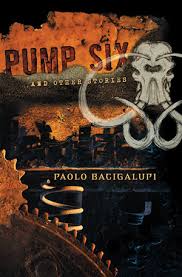
The artwork is fantastic. I love the megodonts (genetically engineered elephants originally referenced in Bacigalupi's fantastic short story anthology Pump Six and Other Stories) and how "Mammoth" they look. The dualism of the trash littered slums versus the futurisitic high rises is a great visual and also ties into some of the themes that were prevelant in Bacigalupi's short stories "The Calorie Man" and "Yellow Card Man" both of which take place in the same future setting as The Windup Girl. Covers that actually echo the content of the book are few and far between in today's publishing landscape.

I also love the title font and it's placement. The two lines seperating the title really make it pop and emphasize some of the background artwork in interesting ways. I'm less entralled with the blurb and the author text but I have a sneaking suspicion that that might not be the final edit. The pixelation and simplicity scream Microsoft Paint.

The publisher's summary is also available on the publishers website (Night Shade Books)

Anderson Lake is a company man, AgriGen's Calorie Man in Thailand. Under cover as a factory manager, Anderson combs Bangkok's street markets in search of foodstuffs thought to be extinct, hoping to reap the bounty of history's lost calories. There, he encounters Emiko...

Emiko is the Windup Girl, a strange and beautiful creature. One of the New People, Emiko is not human; instead, she is an engineered being, creche-grown and programmed to satisfy the decadent whims of a Kyoto businessman, but now abandoned to the streets of Bangkok. Regarded as soulless beings by some, devils by others, New People are slaves, soldiers, and toys of the rich in a chilling near future in which calorie companies rule the world, the oil age has passed, and the side effects of bio-engineered plagues run rampant across the globe.

What Happens when calories become currency? What happens when bio-terrorism becomes a tool for corporate profits, when said bio-terrorism's genetic drift forces mankind to the cusp of post-human evolution? In The Windup Girl, award-winning author Paolo Bacigalupi returns to the world of "The Calorie Man" ( Theodore Sturgeon Memorial Award-winner, Hugo Award nominee, 2006) and "Yellow Card Man" (Hugo Award nominee, 2007) in order to address these poignant questions.
The Windup Girl will be available in September. This is a must buy for me for sure. I absolutely loved Pump Six and Other Stories particularly the all-too-real feel of this future world in which calories are cash. If you haven't done so, I would recommend reading Pump Six before The Windup Girl is released.

Jul 11, 2009

YetiReview: Nekropolis


20 Words or Less: A lackluster urban fantasy that fails to offer empathetic characters almost as often as it fails to be funny.

Rating: 2.5/5 stars

Pros: Interesting setting with potential for future stories,

Cons: Poorly written humor, inconsistent “rules”, lack of protagonists to empathize/identify with

The Review: Angry Robot Books is pushing 4 launch titles. Moxyland was spectacular. Nekropolis? Not so much. Urban Fantasy is very hit-or-miss with me. The characters have to be heroes I can cheer for and the author has to have a certain narrative style that distinguishes the story from the sea of paranormal dreck out there. Unfortunately, Tim Waggoner doesn’t deliver with his characters or in his delivery.

Matt Richter. Private Eye. Zombie. I’ve read paranormal fantasy with wizard protagonists, vampire protagonists, and exorcist protagonists. This is my first zombie. What’s so special about a zombie?, you might ask. Nothing much besides dulled senses and an increased attention span. They don’t feel pain, they don’t breathe, and they apparently don’t have emotions or a libido. Except that they do. When it’s convenient for the story or necessary for character development. Also, Waggoner repeatedly (and I mean repeatedly) hits you over the head with the fact that zombies can’t smell, can’t taste, and can’t feel. Yet Matt has no problem with seeing or hearing. If there’s one thing that bugs me more than anything else, it’s a lack of internal consistency and logic within a story. I wouldn’t have a problem if Matt was a zombie whose only quirk was a lack of pain receptors. Just don’t set up the rules and break them a page later.

I also was irritated by Waggoner’s tone and the lack of consistency in his writing. At times, the story flowed extremely well and the pages flew by. At other times, there was a pun or an attempt at humor that was so painful that I had to set the book down in disbelief. Here’s just one example:

I found myself blasted across the street and through the front window of Les Escargot, a gourmet restaurant run by giant snails. The food's suppossed to be great, but you wouldn't believe how slow the service is. - Pg 229
If you are trying to create a city of darkness, malice, and evil, where everything humans are afraid of resides, don’t make it so pedestrian. It’s takes itself too seriously to be campy and it takes itself too lightly to be scary or suspenseful so it ends up being neither.

Waggoner’s titular city, Nekropolis is certainly a strange one. Advertised as “Tim Burton does Sin City from a Coen Brothers script”, I would say its more Beetlejuice meets Discworld, minus Terry Pratchett’s gift for humor. Vampires, werewolves, demons, ghouls, sorcerers, alchemists, ghosts, zombies, and everything else you can imagine (and some things you couldn’t). The city is interesting and well concocted (at least when Waggoner lays off the jokes). It could (and will) support multiple Matt Richter adventures. There is plenty to do in Nekropolis and Waggoner introduces us to dozens of characters and creatures, some of which work better than others. However, while the world itself is incredibly diverse, it's also significantly flawed in the fact that's lacking any sort of relatable character. The main plot revolves around the destruction of this extra-dimensional city and it’s sinful residents. I simply didn’t care if a bunch of bloodthirsty monsters die. And Matt? He’s already dead. The closest thing to a sympathetic character is Matt’s “love” interest who is 50% human, 50% vampire and 100% the stereotypical librarian type who doesn’t know her own inner strength until she needs to save the day. And I was rooting for the chiranha (that’s a cringe-inducing Chihuahua-Piranha hybrid) to eat her.

To be fair, this is only the first book in a series. Storm Front, the debut novel in The Dresden Files, is definitely the worst book in the series. The difference here is that Storm Front was Jim Butcher’s debut novel whereas Tim Waggoner has written over ten and it doesn’t show. There is an abundance of dialog tags, sloppy character exposition, and deus ex (how do you say coat in latin?). At one point, an informant character actually trades Matt some information in exchange for his origin story which Matt conveniently supplies in an out of place flashback chapter. At another point, yet another informant asks him word for word, “How do you feel about being a zombie?” These are certainly relevant details but the methods Waggoner employs to communicate them are lazy at best and amateur at worst. Waggoner also resorts to the Jacket of Bottomless Pockets that Richter must have stolen from the early Harry Dresden novels. He just always seems to have the perfect solution to every problem to the point where it begins to stretch past my willing suspension of disbelief. Not to mention that the vast majority of characters seem to be best friends of Matt’s that are more than willing to help out. This is surprising given that he is a passionless zombie who has lived in the city for less than two years. It’s the friendliest bunch of homicidal deviants I’ve ever read about.

I realize that I have been nitpicking the book a lot and honestly the book isn’t all bad. The world building in Nekropolis is fantastic and could easily support future Matt Richter stories. There are stretches were the writing is fluid, the characters are interesting and the plot is dynamic. But there are also a lot of stretches where those things don’t happen, and unfortunately, those portions really ruined the story for me. Maybe it just wasn't for me, maybe I just didn't "get it", I'm not sure. If you are a hardcover paranormal fantasy junkie, give this a try. Otherwise, just go read Moxyland again.

YetiPreview: Read here

Jul 10, 2009

I'll Be Damned...


Thanks to John over at sfsignal, I became aware of the impending launch of Damnation Books. They appear to be mostly oriented towards Dark Fantasy/Horror/Paranormal Thriller-type work and offer a range of lengths from Short Story to full length Novel.

The full listing of launch titles can be found over their website. Honestly, none of the titles/authors interest me much. What I found interesting was Damnation Books pricing model.

First off, Damnation is offering ALL of their titles as eBooks. You can also buy any novella or novel as a TPB but they are fully embracing the eBook revolution.

Damnation Books also appears to be intelligent enough to realize that the physical book pricing system doesn't translate to eBooks. Just because you are willing to buy a $20 hardcover doesn't mean you are willing to pay 20 for a digital file.

Here's Damnation's variable pricing strategy.

What the heck is variable pricing? It works like this: At 12:01 A.M on the day a new book goes live on our site, it’s offered free. Yes, you read correctly. The first copy is FREE! With each download the book rises in price by five cents until it reaches its full retail price. At that time, the book remains at full retail price. Coupons and discount codes are not applicable for any book until it reaches its full retail price.

This means that every single one of the books listed above will be launched using the variable pricing at 12:01 A.M. on September 1st 2009. Awesome, huh?


So the first person to download the book gets it for free, the second for a nickel, the third for a dime, and so on until the book reaches full price. This is a very interesting strategy and I'm curious to know if it will work. It will definitely encourage people to follow the site and keep checking for new releases so that they can have a chance at getting books for a fraction of the cost. However, the incentive to buy the book will decrease over time so I'm not sure what this will mean for backlog sales, especially for those titles that don't get sufficient word-of-mouth support from reviewers and bloggers.

This system is also dependent on a continuous flow of new material. More than one project has started out hot and fizzled out as time goes by. If Damnation Books doesn't add quality new material on a semifrequent basis people will forget about them and without a significant level of people buying books, they will never reach the full price point.

I would also like to know what the final prices are going to be. Are they going to be determined via demand? Will there be a set format price (1.00 for Short Stories, 10.00 for novels)?

Also, how are the authors being paid for their work? Do they get a advance and then a percentage of additional sales? Straight percentage? If it takes 200 units sold to get to the full price of $10.00, are the authors getting paid for those 200 units or is Damnation losing money at that point?

There are still a lot of questions here but I'm glad to see someone is trying a different pricing model for eBooks. It could be an interesting experiment to see what price the market will support before sales fall off. I don't think this represents the final answer but it's definitely a step in the right direction.

Check in on Sept 1st to see how their debut goes.

Jul 8, 2009

In the works...


Nothing new today but I hope to have Nekropolis finished and a review up by tomorrow.

I do have a couple of things in the works that aren't quite ready to be posted just yet.

So what is everyone else reading right now?

Jul 7, 2009

BREAKING NEWS: DOCTOROW GIVES BOOK AWAY FOR FREE


Also, Michael Jackson is dead.

As every self-respecting internet/book geek should know, Cory Doctorow makes a habit of giving his books away for free online under Creative Commons Licenses online. His latest effort, Makers, is no exception. Makers doesn't come out until Nov 11th 2009 but it will be serialized in 81 parts on Tor.com. A new "chapter" will be released every Mon/Weds/Fri.


Now Doctorow isn't stupid. He knows that internet downloads translate to paper sales. There is a reason why the 81st chapter of this book is coming out 27 weeks from now in Jan 2010 AFTER the physical copy hits shelves. There are 3 important groups of people in his financial equations.

1) People who like physical books are going to buy the physical book whether its online or not.
2) People who like the story are going to read the first two thirds of the book online and then want the resolution as soon as it is available so they buy the book online
3) People who were never going to buy the book whether it was free online or not. They might read it or they might not.

So Doctorow has got the guaranteed sales from group #1 (which includes myself) and he won't get any sales from group #3.

If he offers the book online, he picks up sales from group #2 who might or might not have bought the book. Plus a couple of people from group 3 might read his book for free, like it, and talk about it. There are also still a few honest people in this world that will buy the physical book to support the author even after they have finished it online.

If he doesn't do this, he still picks up group #1 but no one reads the sample chapters and Doctorow has no additional sales from group #2 or recommendations from group #3.

Also, Tor.com is a young site but it seems to be putting out quality content on a frequent basis so it's reader base has to be growing if not already substantial.

Doctorow just guaranteed a free ad for his book on their front page every Mon/Wed/Fri for the next 6 months. Anyone who visits Tor.com in that time span is going to be aware of his new book.

It will be interesting to see when the remainder of the formats that typically accompany a Cory Doctorow book will be released. I do think that offering the book for free as a finished ebook will cannibalize views from Tor.com but I don't know if that is a concern.

As for myself, I might sample a few of the early sections to get a feel for the novel but I will most certainly be buying it. I'm not a huge fan of reading online and I enjoy a story better when I can immerse myself in it and read it at my own pace rather than having it portioned out to me in bite-sized chunks.

Makers tells the story of a group of hardware hackers who fall in with microfinancing venture capitalists and reinvent the American economy after a total economic collapse, and who find themselves swimming with sharks, fighting with gangsters, and leading a band of global techno-revolutionaries. The first 50,000 words of Makers were serialized on Salon some years ago under the title Themepunks.

Sounds like something straight up Doctorow's alley.

Here's the full story from on Tor.com

Part 1 (of 81) of Makers

So which group do you fall into?

TV Reminder: Warehouse 13


Just a reminder that Warehouse 13 premieres on The Sci-Fi Channel SyFy tonight. Part X-files, part Indiana Jones, Warehouse 13 is an hour long dramedy straight out of the script for National Treasure 3.

After saving the life of the President, two Secret Service agents find themselves abruptly transferred to Warehouse 13 -- a massive, top-secret storage facility in windswept South Dakota that houses every strange artifact, mysterious relic, fantastical object and supernatural souvenir ever collected by the U.S. government. The Warehouse's caretaker Artie (saul Rubinek) charges Pete (Eddie McClintock) and Myka (Joanne Kelly) with chasing down reports of supernatural and paranormal activity in search of new objects to cache at the Warehouse, as well as helping him to control the warehouse, itself.
I'd rather see a more serious Sci-Fi show from SyFy to replace Battlestar Gallactica (Virtuality perhaps?). I do enjoy SyFy's other dramedy Eureka (returning July 10th!). I also loved the pulpy fun of the first 3 Indiana Jones movies as well as the two National Treasure movies. If Warehouse 13 can manage to capture the tone of these shows without becoming too cheesy, it should be an enjoyable summer show to watch on those rainy afternoons. I would prefer if the show were a little bit more serious than Eureka perhaps matching the tone of some of the lighter episodes of Buffy the Vampire Slayer. I would agree that the show most likely can't try for realism or a dark tone given the subject matter.

Hopefully this show is a success and SyFy will start to get back on track with their programming. After the loss of Battlestar and Stargate Atlantis, SyFy is somewhat lacking in original content. Stargate Universe (yay Scalzi!), Caprica, and the Alien Nation reboot will hopefully be quality but they all represent continuations or reboots of existing properties. Eureka, Warehouse, and Sanctuary are the only "original" shows they have running now I believe. It's nice to see completely new properties in a media landscape dominated by CSI spinoffs, Comic Book movies, and Reality TV garbage. Try and make an effort to watch Warehouse 13, if for no other reason than to support something unique.

Learn more about Warehouse 13 at The Official Warehouse 13 Website

Jul 6, 2009

YetiReview: Moxyland


21 Words or Less: A brilliant debut that paints a harsh but strangely realistic portrait of tomorrow with a grace rarely seen in comparable works.

Rating: 4.5/5 stars

Pros: Intriguing ideas, realistic approach, recognizable/relatable characters

Cons: Hands-off approach takes some getting used to early on.

The Review: Reading Moxyland is a lot like watching a painting develop. Early on, when the canvas is mostly blank, it’s difficult to make sense of the individual brush strokes and envision the end result as a cohesive story. Lauren Beukes plunges you into the South Africa of tomorrow without warning, as you follow the lives of Toby, Kendra, Lerato, and Tendeka; four very different twenty-somethings that become entangled in a series of events that will change their lives forever. As each character narrates, you see the interworkings of their future with little explanation or contemplation. While frustrating for the reader at first, the end result is a speculative South Africa that feels more real. When was the last time you thought about how your cell phone worked or delved into the intricacies of xBox Live in your everyday conversation? Those explanations are often a benefit for the reader, but they detract from the authenticity of the story. Beukes manages to riff on the future of communication, video games, corporate sponsorship, modern art, biotechnology, advertisement, crime and punishment, corporate culture, class warfare, government authority, and more, all while remaining within the lives and thoughts of the characters.

Moxyland truly is a Jackson Pollack of ideas, rather than of color. The ideas are everywhere; more often than not intermingling in unpredictable but interesting ways. Cell phones for example, become more than communication devices, becoming wallets, game devices, security keys, and even behavior modifiers (i.e. shock collars). Not having cell phone service in today’s world is an annoyance, in Moxyland disconnection is a form of capital punishment. The ideas come hard and fast, more often than not just giving you just a casual mention or a bit of dialogue to describe an idea another author would frame an entire story around. Becoming a corporate s It’s impossible to tell if one splash of prediction is too much or in the wrong place, but somehow they all seem to fit bizarrely together in a way which is scarily easy to trace back to current trends. It’s a future which is shockingly different yet disconcertingly similar.

In the end, I rated Moxyland 4.5 stars but an uneven 4.5. Early on I was projecting a 3 star book, having difficulty keeping up with the unrelenting flurry of idea after idea. Any book with 4 POV characters is going to take a while to develop, especially within a future setting that might as well be a character on its own. However, once I managed to get acclimated to the unapologetic style with which Beukes conveys her vision of the future, I was captivated for the remainder of the book. I couldn’t put it down and engaged with the world and the characters at the level I expect from a 5-star book. I was afraid that Angry Robot Books had made a mistake; that their flagship novel was a flop. Make no mistake; Moxyland is a work of art.

Jul 4, 2009

YetiPreview: Nekropolis


Hopefully by this point I'll have finished Moxyland and moved on to Tim Waggoner's Nekropolis. Nekropolis, like Moxyland, is a debut title from new publisher Angry Robot Books.

The publisher's description:
Meet Matt Richter. Private eye. Zombie.

His mean streets are the city of the dead, the shadowy realm known as Nekropolis. In this first case, Richter must help a delectable half-vampire named Devona recover a legendary artifact known as the Dawnstone, before it’s used to destroy Nekropolis itself. That is, if he can survive the myriad horrors that infest the city itself.

Pulp and proud, cracking wise like we just dug up the rotting corpse of Dashiell Hammett and put him back to work at his typewriter, Nekropolis is just the first of a trio of fabulous urban fantasies Angry Robot will be bringing you from the mighty Tim Waggoner.

Originally published as a limited run novella, the expanded Nekropolis is the definitive version of this massively entertaining series opener.


At first glance this appears to be part-Jim Butcher/part-China Mieville. Supernatural detective in a supernatural city. I'm expecting something fast-paced, fun, and profoundly weird.

Based on the description, it appears that we've got some vampires and zombies running around the city of the dead. Vampires and Zombies are some of the more overused elements in urban fantasy, so it will be interesting to see what unique spin, if any, Waggoner uses. This will also be my first book by Waggoner so I'm not sure what to expect from him.

Nekropolis will be available in the UK on August 1st but doesn't hit US stores until January 2010.

Jul 1, 2009

Follow-up on Alastair Reynold's Big Fraking Deal


For the past week, the SFF blogosphere has been abuzz with the news of Alastair Reynolds' BFD (Big Fraking Deal) with Gollancz. That figure (1,000,000 GBP) sounds high but it's also a 10-year, 10-book deal so while still considerable, it's not quite up there with the latest Yankees contract (or Manchester United if you are lucky enough to live where Reynolds books are released first). $150K per book is nothing to sneeze at. Unless you're Dan Brown, Stephen King, or John Grisham, I don't think too many authors would be turning that down. Make sure you add Reynolds to your Fantasy Science Fiction team.

Last week, Alastair Reynolds had a discussion with The Guardian which you can read here. I recommend checking it out as Reynolds offers some unique thoughts on Hard SF.


I don't like a lot of what's published as hard SF," he says. "Much of it is rightwing, reactionary crap." Hard SF's insistence on abiding by the laws of contemporary physics is more than just a straitjacket, he continues – it's also unrealistic. "If you're speculating about the state of knowledge 500 years from now, or even 50 years from now, there will clearly be things that will be known then that we would now consider to be nonsensical, or which would directly contradict present theories, in the same way that plate tectonics would have been considered pseudoscience 100 years ago."
I tend to agree with him here. A lot of Hard SF ends up being boring, incomprehensible, or both just because authors let their imaginations get reined in by the current understanding of science. While I think you need to stick to some Hard SF rules, the story should always be the most important element. The most critical aspect for me isn't 100% scientific accuracy, just internal consistency. (Star Trek reboot, I'm looking at you)

Reynolds also provides some insight on the (bad pun alert) novel ideas that might materialize over the next ten years.
As part of the discussions over the new contract, he was asked to sketch out an idea of where he might be in 10 books' time, he continues, "which is crackers. But actually it's not that hard to think of 10 books I want to write." At the moment he's hatching a trilogy charting man's exploration of the galaxy, inspired by a visit to the Kennedy Space Center last year. "It was almost like an epiphany," he says. "I was completely sold on the idea that this is still a valid ambition for us as a species." He's planning to chart a possible future open to us if we can pass through the planetary bottleneck which confronts us now, with books set in logarithmic jumps 100, 1,000 and 10,000 years into the future. With a refreshing lack of the reluctance many novelists show when asked to discuss as-yet-unwritten works, he describes how he is aiming to move beyond the well-trodden path of setting up fictional bases on the moon or Mars, and re-examine how the solar system might be conquered in the light of new scientific data from the last 10 to 15 years.
That sounds interesting. Almost everything I have read has dealt with the beginnings of colonization with the Moon or Mars or assumes it's already happened before the time frame of the book. It would be interesting how Reynolds thinks the colonization of our solar system might play out. I'm guessing we would get to Mars by 2100 and visit anywhere in the solar system we can land without dying by 3000. It will still be interesting to see how that plays out and how he intends on tying a plot to it.

Reynolds also discusses gender issues in SF, settling for imperfection, and why he became a SF writer. Go read it.

And for the love of Asimov, START PUBLISHING REYNOLDS WITH WORLDWIDE RELEASE DATES. I'm tired of waiting for the US editions.

YetiStomper Picks: Books for July


Dead Men's Boots - Mike Carey

The next Felix Castor novel, Dead Men's Boots, is a must read for me. The Felix Castor books rank only behind Harry Dresden in my favorite Urban Fantasy series.

Always Forever (Age of Misrule Book Three) - Mark Chadbourn

The final book in the Age of Misrule series, Always Forever should be interesting. Features Celtic mythology in today's Britain. Check it out if you are a fan of Pyr or great cover art.

The Kingdom Beyond the Waves - Stephen Hunt

Steampunk adventure continuing the story of archaeologist Amelia Harsh that began in The Court of the Air. The first was a fast paced thrill ride. I expect the same pulpish feel in the sequel.

Wireless - Charles Stross

Stross, one of today's SF giants, has a short fiction collection featuring a brand new novella. I haven't read any of Stross's short fiction so it's all new to me.

The Boys Volume 4 (v. 4) - Garth Ennis

The 4th TPB of the rude and crude comic series featuring superheroes at their worst. Definitely not for the kids. I'm serious. If you see your child reading this, take it away from them.

The Price of Spring (The Long Price Quartet) - Daniel Abraham

The concluding volume of The Long Price Quartet. I hope The Price of Spring can deliver on the success of the first three books. There's always M.L.N. Hanover, I guess.

Julian Comstock: A Story of 22nd-Century America - Robert Charles Wilson

Originally a June release, Julian Comstock got strong enough reviews to get added onto my July list. Hugo-winner Wilson predicts a future America after oil runs out and religion takes over.

Are there any books out there I may be missing out on?

You can view previous installments of YetiStomper Picks here

Jun 30, 2009

YetiStomper: Mid-Year Review


So far this year, I've managed to read 27 books although 7 of which were graphic novels.

Here's a few interesting stats about my reading habits the last 6 months.

Science Fiction: 7
Fantasy: 9
Non-Fiction: 2
Star Wars Books: 3
Short Story Anthologies: 2
Young Adult Books: 3
Fiction Writers I Hadn't Read Before: 8
Books over 500 pages: 7
Graphic Novels: 7
Male Authors: 15
Female Authors: 4

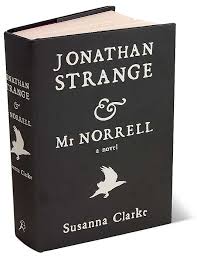
My goal for this year was to average at least 50 pages a day or about 1 full length novel a week. I've found this is about as aggressive as I can be while maintaining a full-time job and a social life. Without graphic novels I am stand at 20 books, 6 off from the pace at the half way mark. However, I might still be there in terms of page count since I made an effort to get through some of the doorstopping tomes that had been taunting me from the Reading Pile particularly Jonathan Strange and Mr. Norrell as well as the mammoth (and classic) Bone omnibus.

I managed a decent mix between Fantasy and SF with Fantasy getting a little boost from the two Fantasy trilogies I read (Power/Voices/Gifts and The First Law) versus only Star Wars (3 books) adding to the SF side of things. If you count series as a single book it's a 1:1 ratio so I'm happy with the blend of SF and Fantasy along with some non-fiction and graphic novels. It helps to avoid getting too burnt out with a specific genre or sub-genre. I recommend keeping it fresh by balancing "heavy" reading with faster "popcorn" reads and not to try too many new authors back to back to avoid the potential of several "misses" in a row.

I managed to sample a portion of Short Fiction with the 2 anthologies but I'd still like to be better read in that subsection of genre fiction. I'm also a little disappointed in the ratio of male to female authors. You could say my reading habits are sexist but honestly I never even thought about it until now.

I also managed to read 8 fiction authors I never have before.

-Paolo Bacigalupi
-Joe Abercrombie
-Stephenie Meyer
-Jose Saramago
-Bryan Lee O' Malley
-Susanna Clarke
-Bernard Beckett
-China Mieville

Out of those 8 I would say Abercrombie, Bacigalupi, Mieville and Beckett are the ones I would be most likely to read again although I will have to finish the Scott Pilgrim series whenever the concluding volume hits stores.

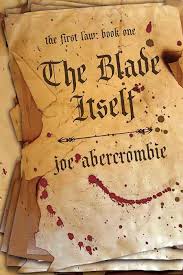
Favorite Read of the Year: The First Law trilogy by Joe Abercrombie. I know the books didn't come out this year but it doesn't stop Abercrombie's debut trilogy from being the most enjoyable and entrancing thing I pulled off the shelf this year. I absolutely tore through them at least a 100 page a day pace. Such a fun, fresh, and face paced take on the genre really revitalized my opinion of Fantasy, which was somewhat jaded after watching so many long series drag on forever only to end poorly.


Goals for the 2nd Half of 2009
-Continue to read at a 50+ page a day pace
-Read at least 3 more short fiction anthologies
-Read Shadows of the Wind
-Read at least 3 more Hugo/Nebula winners
-Tackle Y: The Last Man (10 Graphic Novels)

So 6 months into 2009, how many (and what kind of) books have you read? What are your reading related goals for the rest of the year?

Jun 29, 2009

YetiPreview: Moxyland


Moxyland is the debut title from new genre publisher Angry Robot Books. It's written by a South African author named Lauren Beukes and I believe it's her first novel as well. Amazon promises:

A frighteningly persuasive, high-tech fable, this novel follows the lives of four narrators living in an alternative futuristic Cape Town, South Africa. Kendra, an art-school dropout, brands herself for a nanotech marketing program; Lerato, an ambitious AIDS baby, plots to defect from her corporate employers; Tendeka, a hot-headed activist, is becoming increasingly rabid; and Toby, a roguish blogger, discovers that the video games he plays for cash are much more than they seem. On a collision course that will rewire their lives, this story crackles with bold and infectious ideas, connecting a ruthless corporate-apartheid government with video games, biotech attack dogs, slippery online identities, a township soccer school, shocking cell phones, addictive branding, and genetically modified art. Taking hedonistic trends in society to their ultimate conclusions, this tale paints anything but a forecasted utopia, satirically undermining the reified idea of progress as society's white knight.
The blurb has me intriguing and I always love reading about projected futures for non-American cultures. Charles Stross's Halting State (Ace Science Fiction) and Ian McDonald's Brasyl and River of Gods were great reads so it will be interesting to see if Beukes can do the same for her native South Africa. The SF ideas sound like something straight out of a Stross novel. Add in the fact that Beukes is the debut author Angry Robot Books is hanging their hope on

The cover art is attention grabbing and those "image missing" icons get me every time. The neon orange really attracts the eye and the missing faces would probably get me to flip the book over. It's not my favorite cover ever but it certainly gets the job done. I'd give it a B/B+

Moxyland is 304 pages long. I'm not sure when I will be able to post a review because of the upcoming holiday weekend but it will be up in the near future. As always, read along if you can!

Thoughts on Virtuality


I watched the 2-hour pilot of Virtuality on Friday and long story short: I want to see more.

While not perfect, Virtuality is legitimate SF of the kind not seen on network TV. While I'm sure they took some liberties with the physics, Virtuality is plausible Hard SF. Lost, Firefly, Fringe, Battlestar Galactica, Dollhouse, Heroes and every other example of "genre" TV current on the airwaves has at least some elements that could be considered fantastical.

The only questionable item in Virtuality was the virtual reality system they used for R&R and escape from the reality TV cameras. It seemed to be a little too immersive for just the visors but it certainly didn't break any fundamental rules of physics or try to explain why genetic mutations would allow you to fly or predict the future. Cough *Heroes* Cough. This is the kind of SF that could get a new generation interested in space travel.

I was fairly impressed with every aspect of the show. The cast was great. The writing was good. The premise was solid. The effects were better than most on TV. The show wasn't predictable (the events toward the end of the pilot really surprised me). The plot threads they introduced were intriguing. While somethings could have been better, I didn't have too many complaints, especially for a pilot. Compared to Dollhouse or Fringe, Virtuality hit a home run.

I'm not sure why they were trying so hard to screw over the show. Maybe Ron Moore wanted too much money, maybe the SF budget is too high for the expected ratings, who knows? But they did dump the premiere show on a Friday night, in the middle of summer, against the opening weekend of Transformers 2 with almost zero advertisement. I don't get it. What did they expect to happen? Record ratings? Add to the fact that it was also running against specials commemorating the lives of Michael Jackson and Farrah Fawcett and it's no surprise it didn't do well. Pair it against Dollhouse and I guarantee it will find an audience.

Virtuality is definitely marketable. It has the spaceship and SF tropes to connect with the core geek audience but it also has the reality TV and relationship drama that could reach out to female viewers without alienating them with the more extreme SF tropes like aliens or time travel. More than Stargate, Heroes, or Fringe, I feel like Virtuality could be watched in mixed company. I've even heard from a source or two that the eye-candy on board the ship works both ways.

All in all, I'm disappointed that Virtuality did so poorly. The show has a lot of potential and I want to know what was going on. Who is the murderer on board? And what did the victim's last message mean? I would definitely tune in again to find out. The fact that I will most likely never know makes me hate the economics of network TV. Any chance the SyFy channel is looking for another show?

You can watch Virtuality on Hulu here if you enjoy the pain of knowing this decent show most likely died before it even aired.

Jun 28, 2009

YetiReview: Omen (Fate of the Jedi, Book 2)


20 words or less: Mediocre Star Wars novel that takes no chances while slowly progressing the overall plot of Fate of the Jedi.

My Rating: 2.5/5

Pros: Avoided mistakes of Legacy of the Force, no glaring continuity errors

Cons: Mostly a set-up novel, overly cutesy at times, poor execution of Luke/Ben subplot, weak page count.

The Review: If I were judging Omen by itself, I would give it a 1 or a 2. But Fate of the Jedi appears to be trying a more serialized structure than Del Rey’s two previous SW series so it's hard to distinguish one book separately from the series. Fate of the Jedi is really putting the “opera” back in “space opera.” Rather, I’m going to focus on its role within the series. There are the overarching threads that began in Outcast and continue here but aside from a very poor sub-plot featuring Luke and his son Ben there are no internal plotlines that get resolved by the end of the book. Young Jedi continue to go crazy with the mysterious Force sickness, Jaina and Jag continue to investigate what could be causing it in the face of government pressure, Luke and Ben continue to retrace Jacen’s five year sojourn, and Leia and Han continue to do nothing of importance. The book felt like a continuation of the series but it didn’t do anything that necessitated it as separate release from that of Outcast, especially given the fact that fans of the series waited 3 months to get a meager 236pages.

The only new information or plot development that we really gott was the introduction of a Sith remnant that had been marooned on the planet of Kesh for the last 5,000 years. Recent developments in the SW universe had set in motion a series of events that ended up with an ancient and sentient Sith ship locating the planet and allowing the Sith castaways to escape the planet. This was one of the more interesting plots of the book but it felt strange that it was introduced in this book rather than the previous one. It’s almost as if the series planners decided there wasn’t enough plot to carry a 9 book series without filler so they decided to introduce another plotline to boost the still low page count.

Other the insane Jedi plotline, which is interesting but extremely slow paced, the other characters have very little to do. Han and Leia took their granddaughter to buy a pet. Seriously? This very predictably started out as a mash-up of all of the creatures ever witnessed in a Star Wars film (rancors,rontos,banthas,etc.) and even more predictably turned into a fairly boring action sequence when the creatures get loose. The probability that Han Solo dies from being attacked by that large cat species from Attack of the Clones is so small that C-3PO couldn’t quote me the odds. Han and Leia are stuck in a character limbo where they can’t be killed off but they also can’t be fade into retirement; either of which would apparently upset the fanbase more than just making up ridiculous, implausible ways to give them something to do. But I can’t blame Christie Golden for making nothing out of nothing. She’s writing in a set series and she has to work within what she has assigned.

What I do blame Golden for is the lack of delivery in Luke and Ben plotline. She was giving the Aing Tii monks to develop, a mysterious Force sect that can use the Force to teleport, time travel, and who knows what else. There was so much potential and all of it ended up wasted, with the Aing Tii being extremely boring and developed as well as Michael Bay plot. There was a brief thread about a mysterious prophet that was interesting at first but that thread ends up being very poorly resolved with a conclusion straight out of an after school special. This wasn’t too different that the Baran Do (another Force sect) plotline in Outcast which didn’t do much other than give something for Luke and Ben to discuss and resolve until they figured out the next stepping stone in Jacen’s journey. They could give these Force traditions so much more depth and character but they turn them into these boring groups which are too stupid to solve their own poorly developed problems.

Another problem I had with Golden’s delivery was her choices of language. More than a few times, she chose weird turns of phrase that I can’t really describe other than “not Star Wars.” Even when they weren’t bad writing, they were still just off somehow. For example, towards the end of the book, Ben Skywalker gets excited and exclaims “Lubed!” That’s not a Star Wars utterance, and it shouldn’t every be said. Anywhere. At other times, she tried to be a little too cute with the dialogue between characters in relationships (Han/Leia or Jaina/Jag) and the conversations felt more at home in a romantic comedy than in Star Wars. Han and Leia tease each other in the movies but they aren’t so sappy about it. Golden seems to be the weakest of the 3 series authors so far, at least in terms of pure writing ability. I was not impressed with her Star Wars debut.

Regardless of quality, the overall plot did advance and it managed to do so without the rehashing and confusion that happened in the Legacy of the Force series which was one of my major concerns going into the series. They planners have really made an effort to organize FotJ, almost to the point where it seems like the books are overly simplistic because there is no room for organic growth. This book was released in hardcover with only 236 pages (the shortest HC Star Wars book ever, I believe). There were 4 major plotlines and I think that it wasn’t until page 90 or so that a single POV was repeated. 236 pages isn’t enough to write a complex and compelling story for four distinct groups of people whose storylines have yet to intertwine. If they combined it with the 309 pages of Outcast and edited out a few of the unnecessary scenes, you would have had a 545 page book that clearly established the plot of the series and would be worth the cover price. As a single 236-page book, Omen fails significantly. However, the faults of the book are independent of the faults of the series. As an entry in the Fate of the Jedi series, Omen manages to progress the story along without screwing up characterization or retreading old plot and I'm interested to see what happens when the storylines finally do manage to intertwine.

Jun 27, 2009

YetiPreview: Omen


I got Omenon Wednesday and but I still had a couple hundred pages of Powers left so I had to get through that first. Any book in the Star Wars "present" automatically jumps to the front of my reading queue. It might be bad, it might be pulp, but it's Star Wars, which has always had a special place in my heart.

Omen is Book 2 in the Fate of the Jedi after March's Outcast. Outcast was a huge departure from Del Rey's usual offering in the sense that it was a fairly stand-alone book, despite being the first of the 9 book arc. It gave some hints at a larger plot but not a whole lot. Basically, we know that something is driving the Jedi insane, we know there is something in the Maw that is being omnious, and we know that Luke and Ben are off in the Unknown Regions looking for what happened to corrupt Jacen but that they haven't found anything yet. It terms of open plot threads, almost everything was neatly tied off at the end of Outcast. I found this a bit strange but also a positive sign of change.

The previous series, Legacy of the Force was another 9-book series, but it only contained about 5 books worth of story. Because the books were being written simultaneous by different authors, there was often a lot of rehashing and repeated character development between books. It seemed like there wasn't a clear definition of where one book was going to end and where the next would begin. Characters would make the same decisions or realizations two, three, or more times, leaving readers confused and irritated. It was messy, poorly organized, and the story suffered.

But it looks like Fate of the Jedi is avoiding that by using clearly defined milestones between each book. I guess I'll be able to judge that better after I finish Omen.

Omen is the first book I've read by Christie Golden, so I'm not familiar with her writing style. If she can describe an action sequence better than Troy Denning and write humor like Mike Stackpole or Aaron Allston then I'm sure she will do fine. Just stick to the continuity, try to research the characterizations, and you will do fine.

Here's the Amazon description:

The Jedi Order is in crisis. The late Jacen Solo’s shocking transformation into murderous Sith Lord Darth Caedus has cast a damning pall over those who wield the Force for good: Two Jedi Knights have succumbed to an inexplicable and dangerous psychosis, criminal charges have driven Luke Skywalker into self-imposed exile, and power-hungry Chief of State Natasi Daala is exploiting anti-Jedi sentiment to undermine the Order’s influence within the Galactic Alliance.

Forbidden to intervene in Jedi affairs, Luke is on a desperate mission to uncover the truth behind Jacen’s fall to the dark side–and to learn what’s turning peaceful Jedi into raving lunatics. But finding answers will mean venturing into the mind-bending space of the Kathol Rift and bargaining with an alien species as likely to destroy outsiders as deal with them. Still, there is no other choice and no time to lose, as the catastrophic events on Coruscant continue to escalate. Stricken by the same violent dementia that infected her brother, Valin, Jedi Knight Jysella Horn faces an equally grim fate after her capture by Natasi Daala’s police. And when Han and Leia Solo narrowly foil another deranged Jedi bent on deadly destruction, even acting Jedi Grand Master Kenth Hamner appears willing to bow to Daala’s iron will–at the expense of the Jedi Order.

But an even greater threat is looming. Millennia in the past, a Sith starship crashed on an unknown low-tech planet, leaving the survivors stranded. Over the generations, their numbers have grown, the ways of the dark side have been nurtured, and the time is fast approaching when this lost tribe of Sith will once more take to the stars to reclaim their legendary destiny as rulers of the galaxy. Only one thing stands in their way, a name whispered to them through the Force: Skywalker.
I already gave a discourse on the FotJ cover art here. In summary, I like it. A lot. The Omen cover features a Sith looking female so I am slightly curious to see where that goes.

I'm also curious as to what Omen refers to. Star Wars is often extremely bad about having titles that actually pertain to the events of the novel. Invincible featured a death. There were no revelations in Revelation. However, Outcast did feature an outcast so Del Rey is currently 1-for-1 with FotJ.

Omen is a disappointly short 250 pages. I should be able to get through it today so hurry if you are reading along.

Jun 26, 2009

YetiReview: Gifts, Voices, and Powers


20 words or less: This trio of YA fantasy novels focuses on teens maturing through difficult situations but contains a deeper message for readers everywhere.

My Ratings
Gifts: 4/5
Voices: 3.5/5
Powers: 5/5

Pros: Simple yet elegant prose, allegorical themes pulled off by a genre master, accessible at multiple levels

Cons: Some YA tropes. Slowly paced. Lacks concrete plot.

The Review: When I learned that Ursula K. Le Guin’s Powers had won the Nebula, I was surprised. I hadn’t heard any buzz about the book and knew almost nothing about it other than it was YA (Side Note: I am not prejudiced against YA, Little Brother was one of my favorite reads last year). I assumed that it was a prestige award based on name recognition alone. I thought it was 2004 all over again, when Joe Haldeman won the Nebula with the almost indescribably terrible Camouflage. I do make an effort to read the award winners though and I set out to read her Annals of the Western Shore books, if only to satisfy my completist compulsions.

I could not have been more wrong.

I was going to review these books individually but I realized that they were best read together, so I might as well speak to them together. In fact, as I read the second and third books, my feelings toward the prior books morphed and changed and I started to take meaning from the stories that I wasn’t expecting; mostly due to their YA “stigma”. These books may be written for kids and about kids, but they have some very profound ideas hidden in their depths.

Each book focuses on a different protagonist growing up in a different part of the Western Shore in a different social climate. In Gifts, Orrec Caspro faces the pressures of being the son and heir of a noble bloodline. In Voices, Memer deals with being a young woman born into a once noble family subjugated by misogynistic and repressive conquerors. In Powers, Gavir struggles with the harsh realities of being a slave in a rigid class structure. Without spoiling the details, each of the characters experience life changing events that affect themselves as well as the social structure in which they were raised. I will say that the events are not epic in the sense of the traditional fantasy novel. There is no Dark Lord, no Chosen One, and no Elves, no Dwarfs, no Dragons, or other fantastic creatures. Aside from the imagined geography and some minor mystical abilities, these books are very personal stories that could have taken place within our own history.

All three novels deal primarily with the paths the protagonists take through their formative years, foregoing strong plot cohesion to focus on who these characters are. The stories meander through their lives, lingering on seemingly mundane moments but not hesitating to leap forward months or years without warning. In this respect they are typical YA fare, focusing closely on the central characters and dealing with the questions and uncertainties that are a part of growing up. There are also some even more adult topics, namely slavery, rape, and murder. These are definitely not children’s books. While some YA novels get heavy handed with their discussions of maturation and societal expectations, Le Guin demonstrates why she is a master of the craft, managing to write realistic teen characters without having them come across as angsty and putting them through difficult situations without being explicit or gratuitous. In case you didn’t know, Le Guin is 79. She hasn’t been a teen for 61 years.

The Annals of the Western Shore work as YA fiction, and work well. However, the real enjoyment for me was the message within the stories that Le Guin seemed to be sharing with her readers. Granted, I could be reading things from the text that were not intentional but Le Guin’s love for writing and literature really came across in her characters. I’m reluctant to use the term “swan song” because I’m confident Le Guin has more stories to tell, but I got the sense that these novels were a reflection on her career as an author and the importance that writing and storytelling has had in her life. Despite dramatically different situations, each one of these teens has the benefit of literacy and education in their lives, and in each case, it becomes a source of satisfaction and strength. Through her characters, Le Guin demonstrates her belief in the power of stories; that they can transcend mere words to become beauty, healing, inspiration, knowledge and more. Stories can motivate people to change, bind communities together, preserve history and culture, bridge societal gaps, and capture the imaginations of all that hear them. There is a intrinsic power in stories, a power available to anyone regardless of class.

Mirroring this theme, Le Guin also addresses the common reasons why people in real life don’t read and creates analogs within the lands of the Western Shore. There are people who believe stories are only for children, cultures that think books and knowledge can only corrupt, and places where the written word simply doesn’t exist. She doesn’t belittle them for their beliefs but pities them for all they are missing. I really connected with her emphasis on the power of words (it’s more discreet and less cheesy than my brief synopsis), especially as a lifelong bibliophile who has often felt like their passion for reading wasn’t fully understood. I also fully endorse and respect her efforts to communicate this idea to the YA readers at which this book is targeted. I encourage anyone who loves reading and literature to try these books, or at least to give them to your teens. I know I will be.

As a final note, Powers might not have fit my expectations of a Nebula winner but this book connected with me and spoke to me on a level few do. Le Guin is truly a master of the craft and Powers is yet another spectacular book in a continually unbelievable career.
Related Posts Plugin for WordPress, Blogger...